Enjoying Okinawan Fish (Part Two)
I said I would write about the rest of my trip to Okinawa in the summer, but before I knew it, the season had moved on.
My apologies.
On my first day in Okinawa, I enjoyed sushi that made the most of Okinawan fish.
On the second day, I decided to have Ryukyuan cuisine.
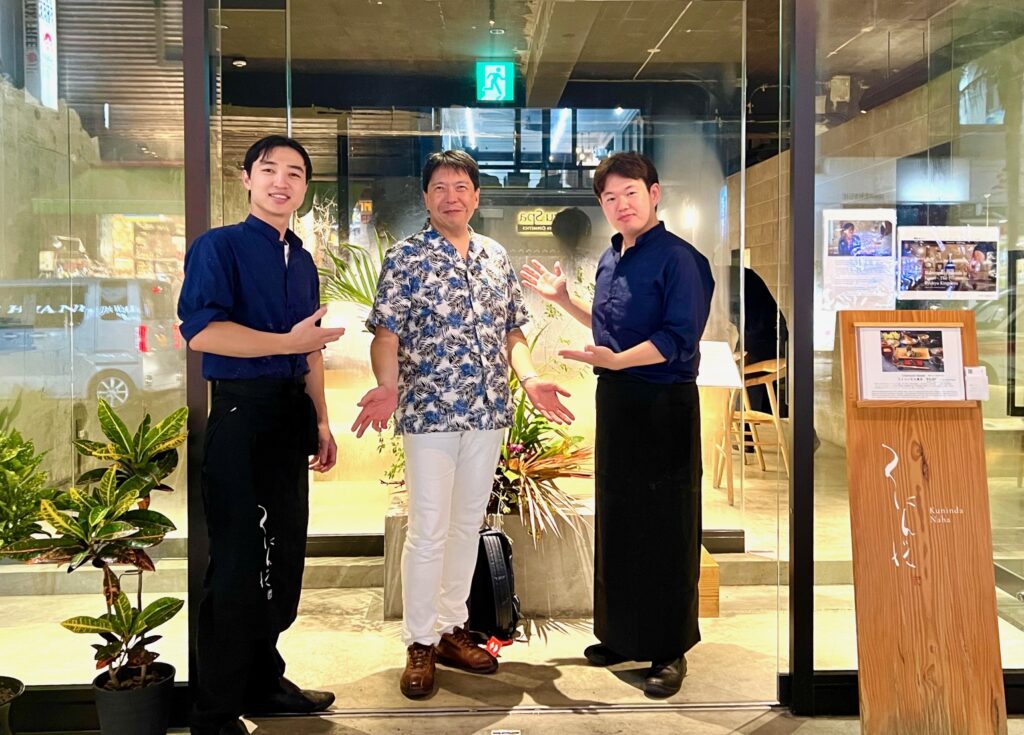
Before visiting Okinawa, I searched online and found this restaurant called Kuninda.
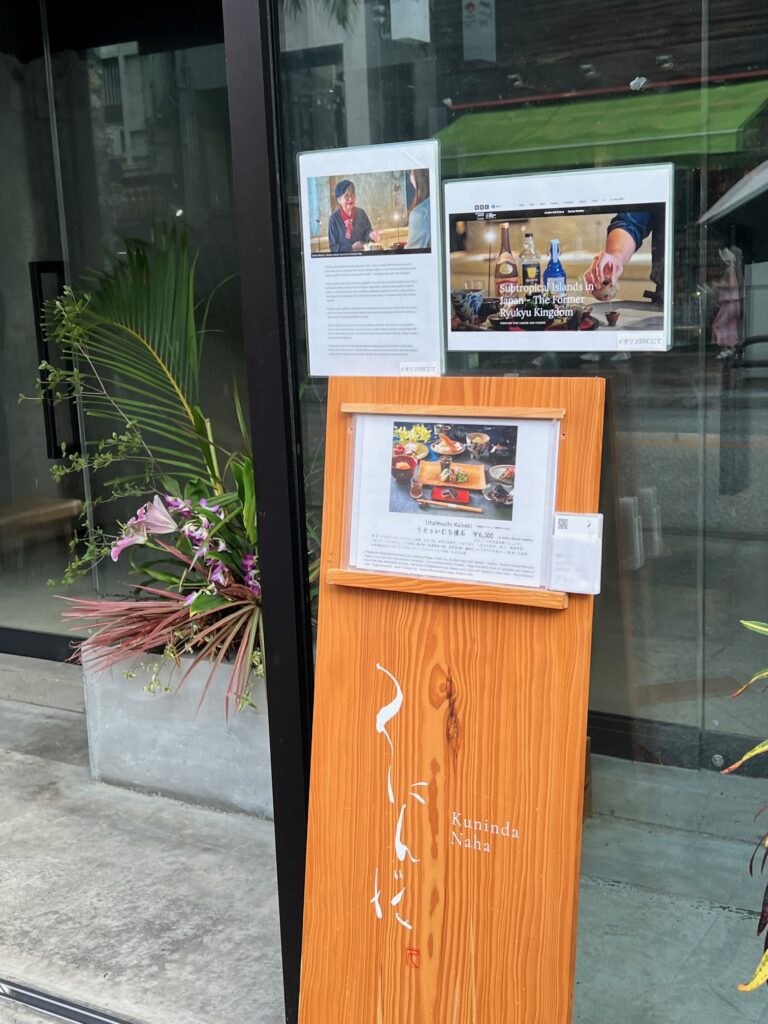
As it happened, I learned that it was run by an acquaintance of Manager Tamaki of Tsukiji Aozora Sandaime Naha Main Branch, who had looked after me the day before.
It really is a small world.
It is a very modern restaurant on the Prefectural Office side of Kokusai-dori.
The guests and the chefs are all young.
As the fifth-generation proprietor, I like long-established establishments and veteran craftsmen, but I also love seeing young people working hard.
The lighting inside is quite subdued, creating a wonderful atmosphere.
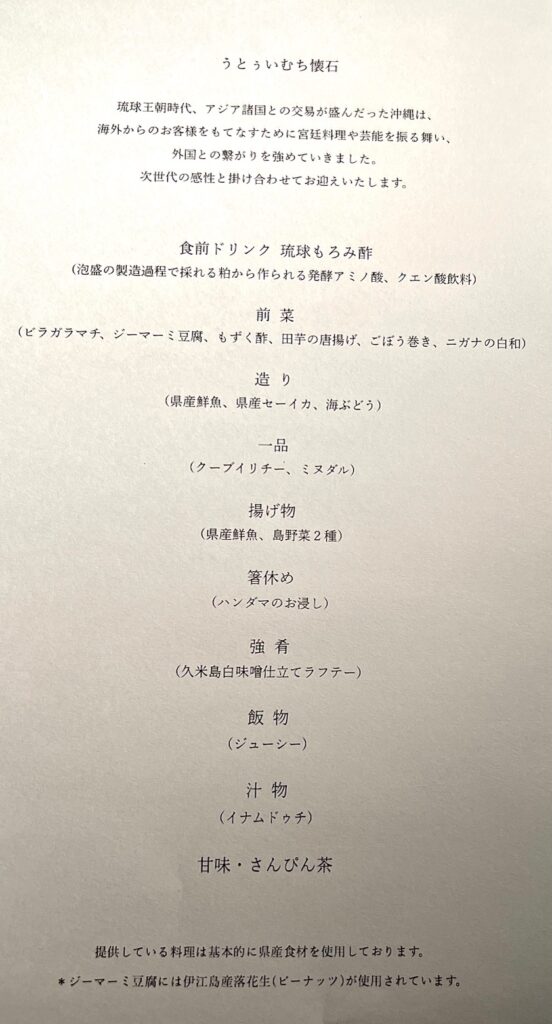
As soon as I sat down at the large counter, an appetizer was served.

There were small, colorful portions of traditional Okinawan dishes, including jimami tofu, Okinawan mozuku seaweed, and fried taro.
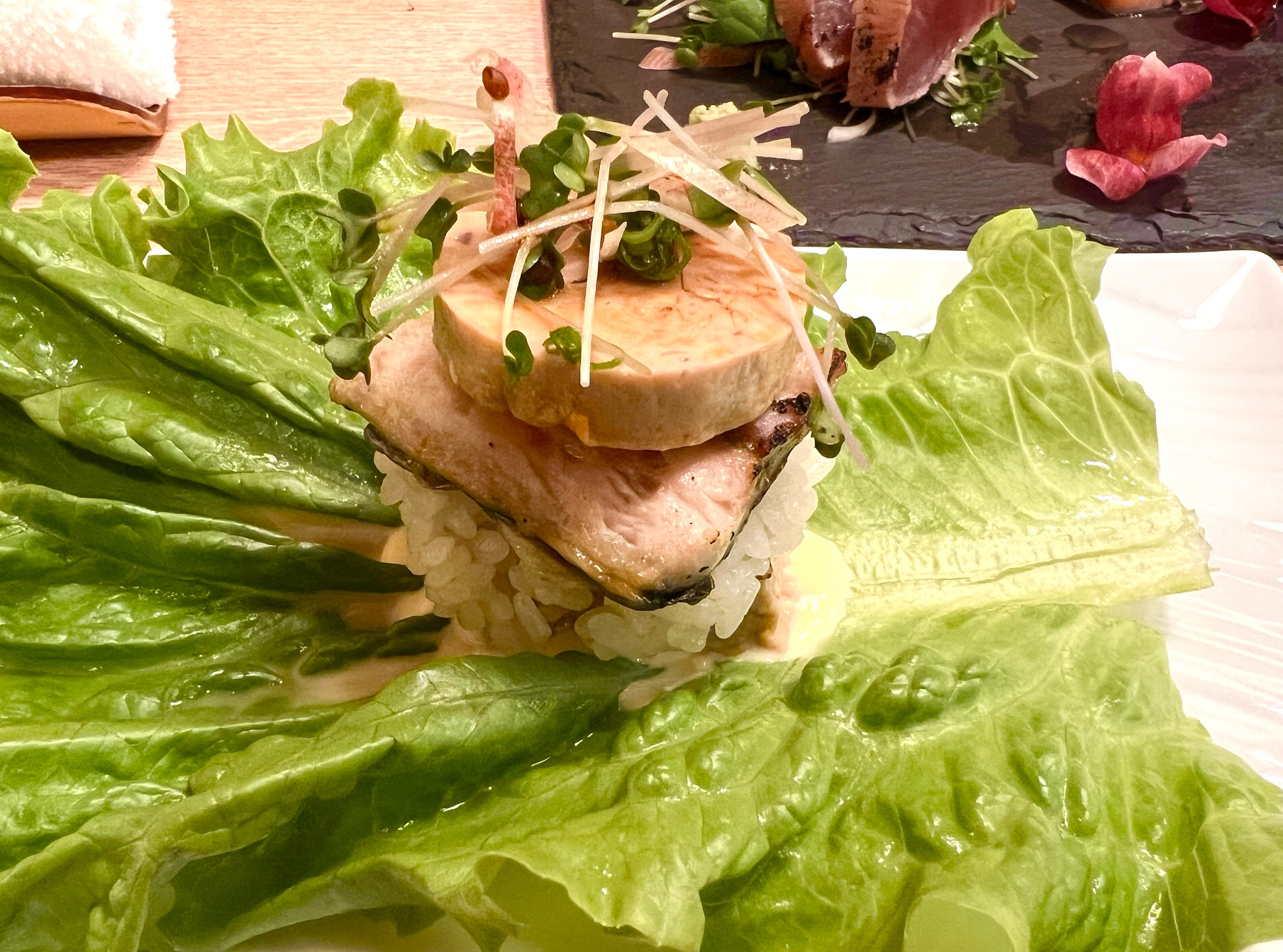
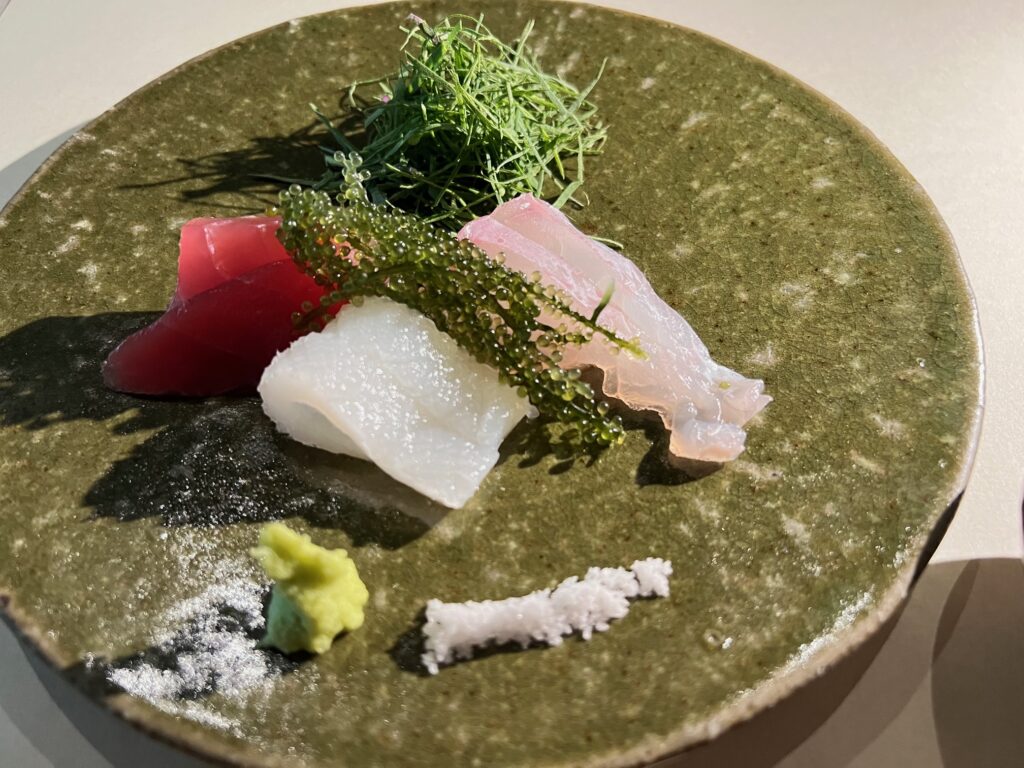
The sashimi included yellowfin tuna, akajin miibai from Miyako Island, sei ika, as well as sea grapes and chomeiso as accompaniments.
Kubu irichi is a home-style dish, but it was prepared with such refinement—just what one would expect from a proper restaurant.

Minudaru, pork belly coated with a black sesame paste and steamed, was also exquisite.
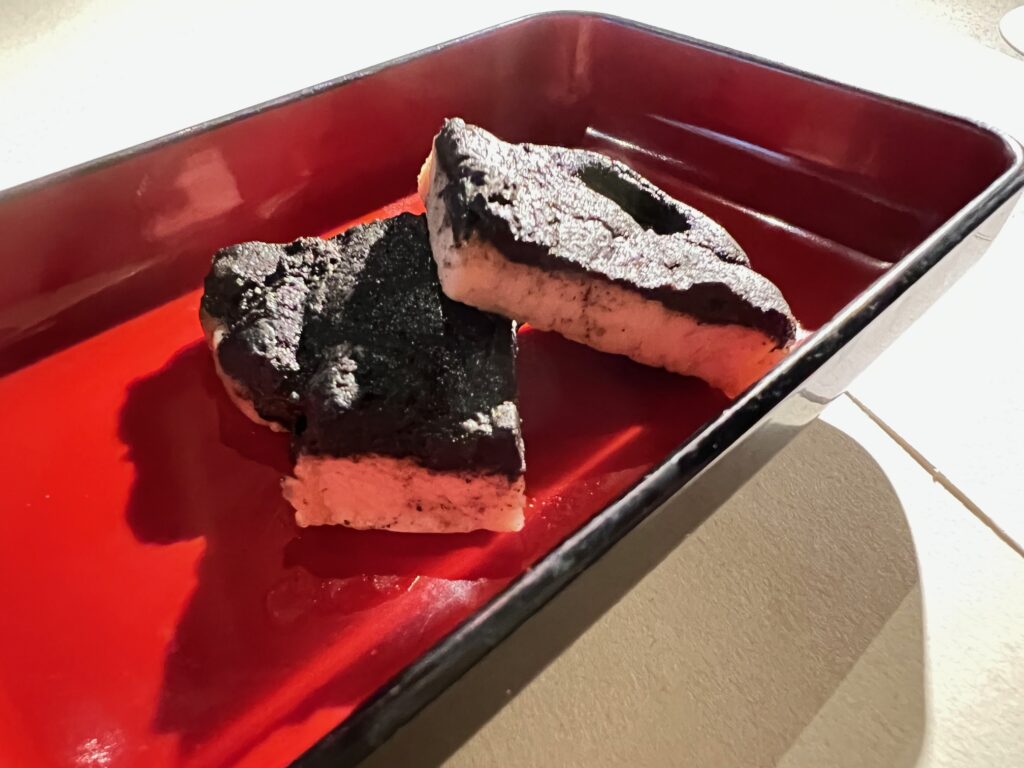
Okinawan pork dishes really are delicious.
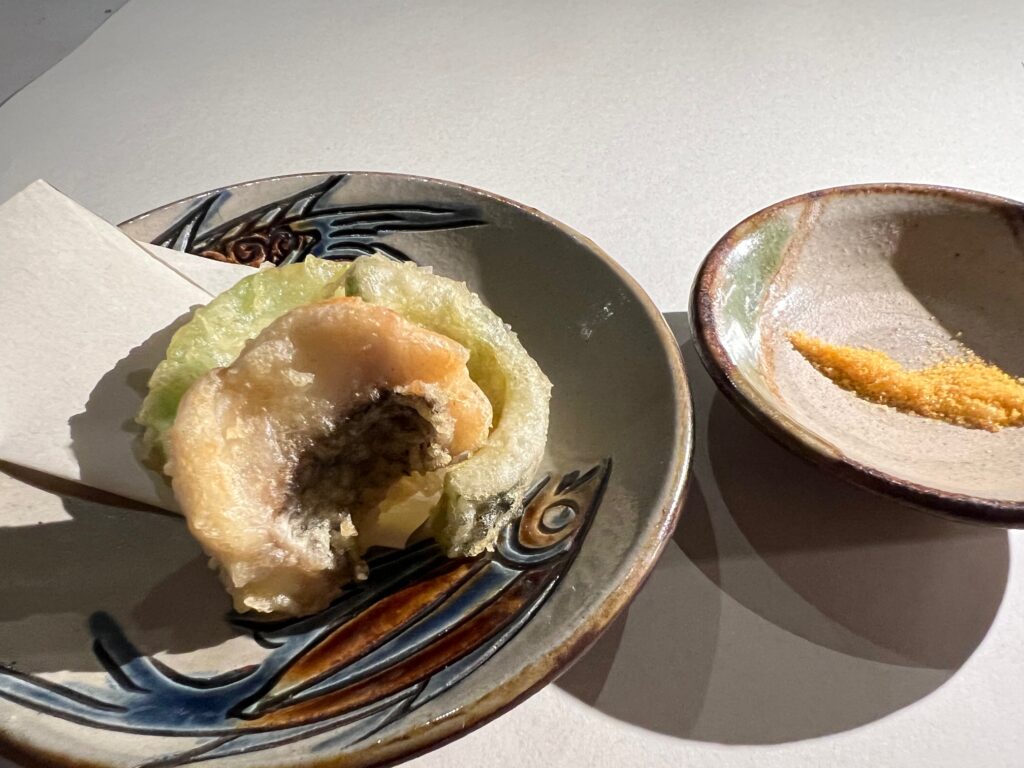
For tempura, there was shiichumachi, a high-grade fish, goya, and nabera, an Okinawan loofah; these were served with turmeric salt.
The palate cleanser was handama (bitter greens) ohitashi.
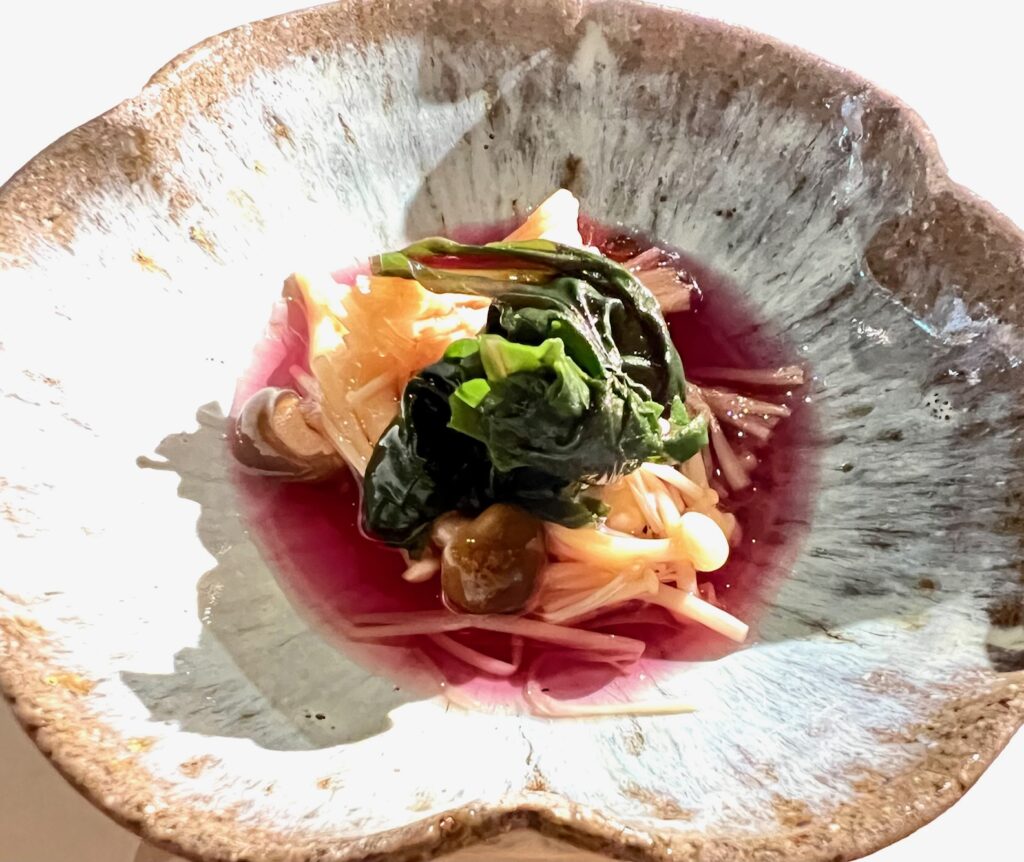
Rather than cleansing the palate, its bitterness spread through the mouth.
Then came the main dish: rafute.
It was the best rafute I have ever had in my life.

Long ago, I made rafute under Chef Shinoshima of Japanese cuisine, and I enjoyed it while recalling those days.
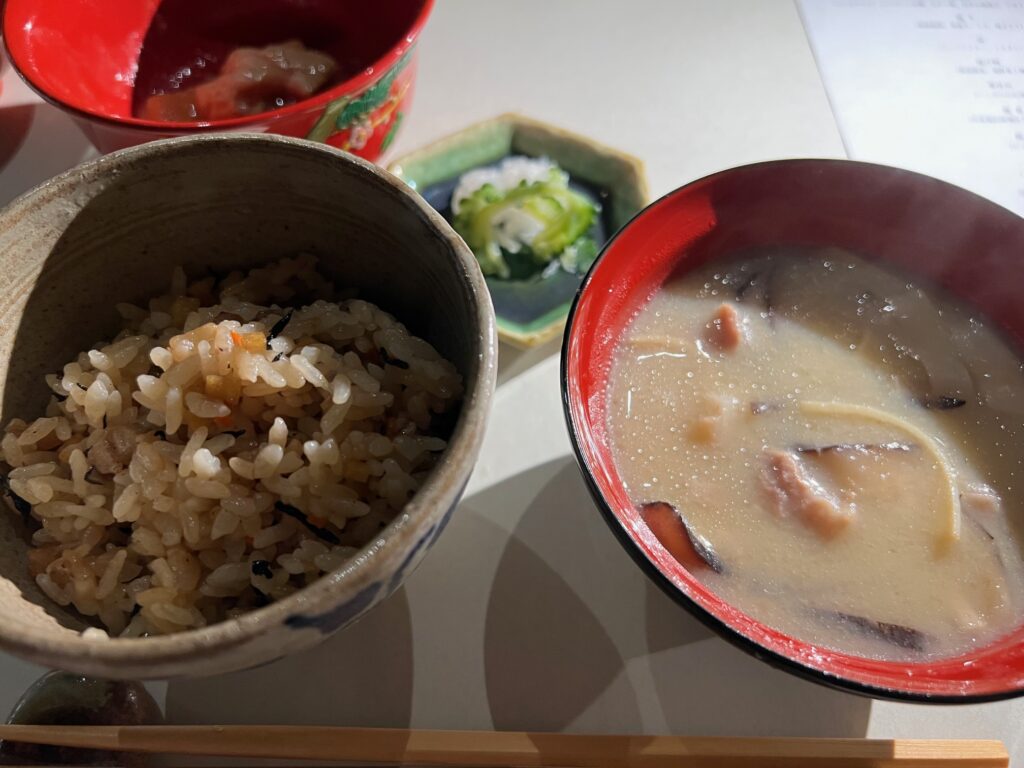
The meal was jushi rice, miso soup, and pickles.
The gently flavored zenzai dessert and the warm sanpin tea at the end both conveyed Okinawa's warmth.
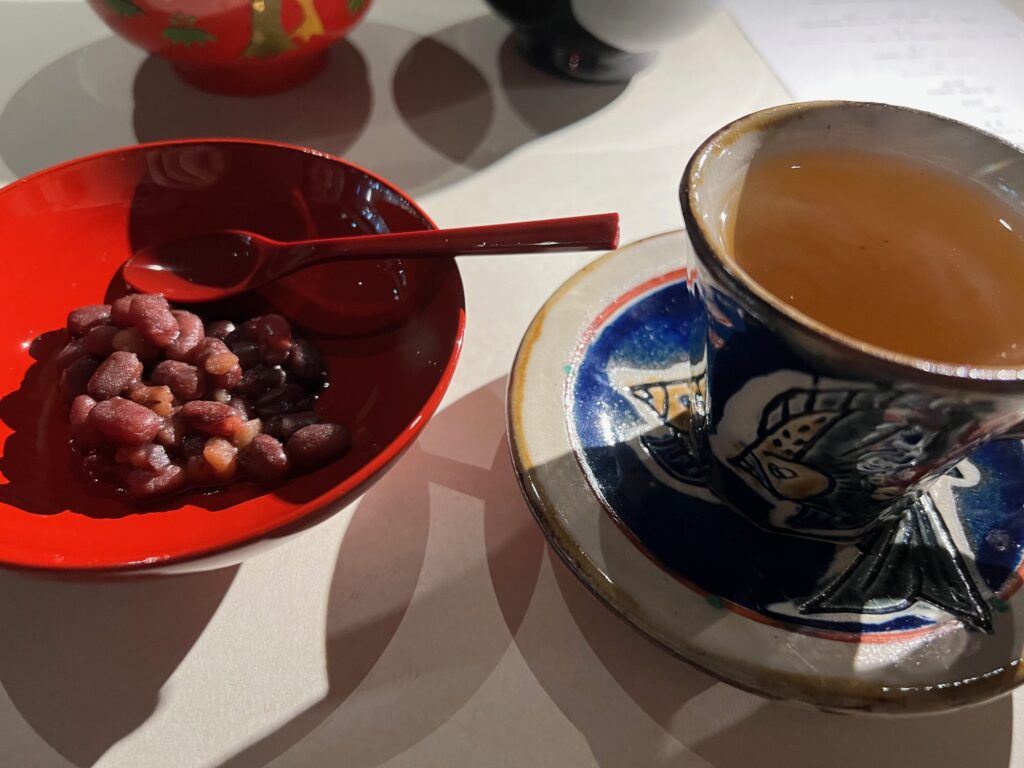
And then there was the tableware.
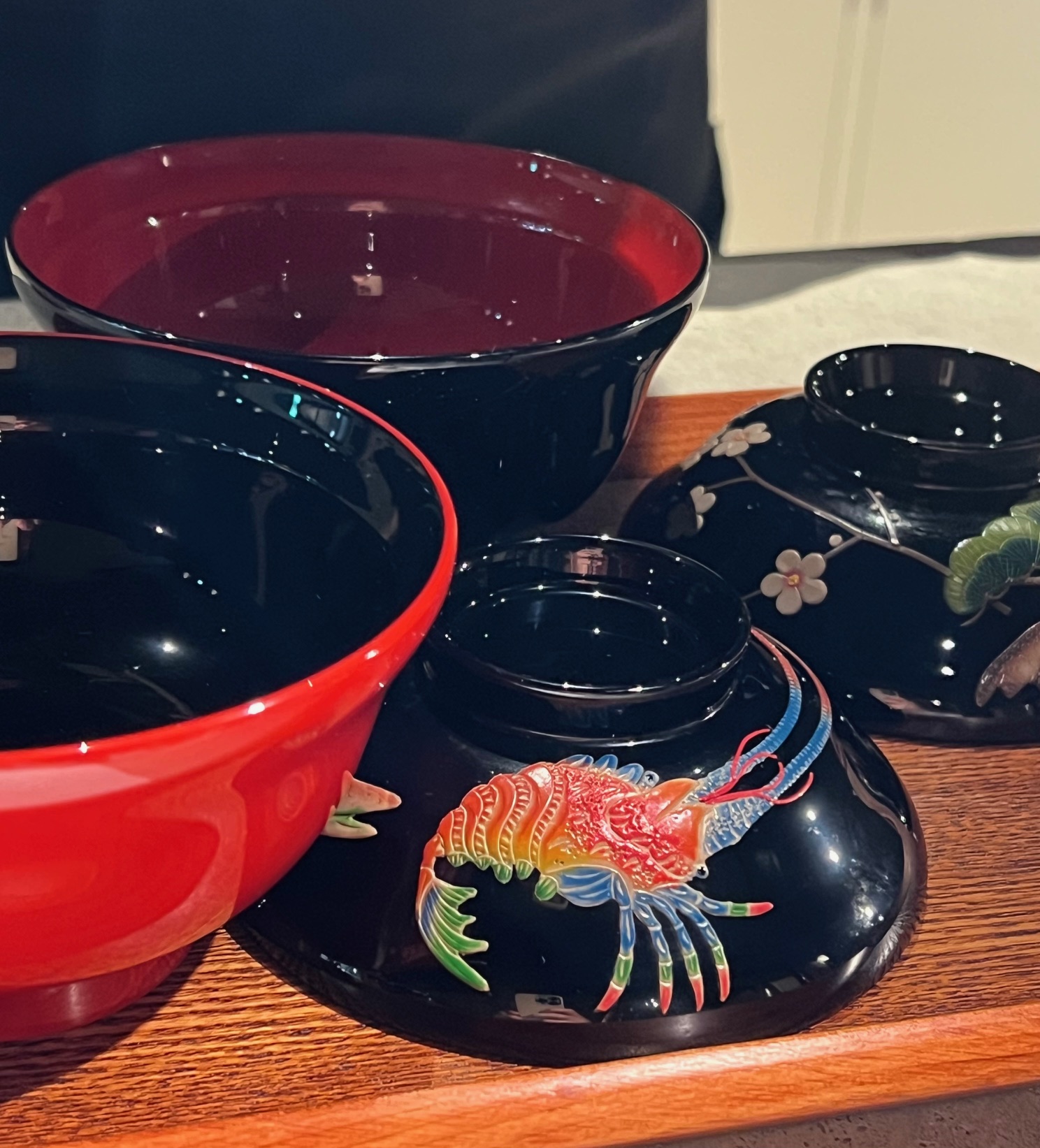
Yachimun, Okinawan pottery—the Okinawan word for ceramics—is wonderful, of course, but the lacquerware is also especially lovely.
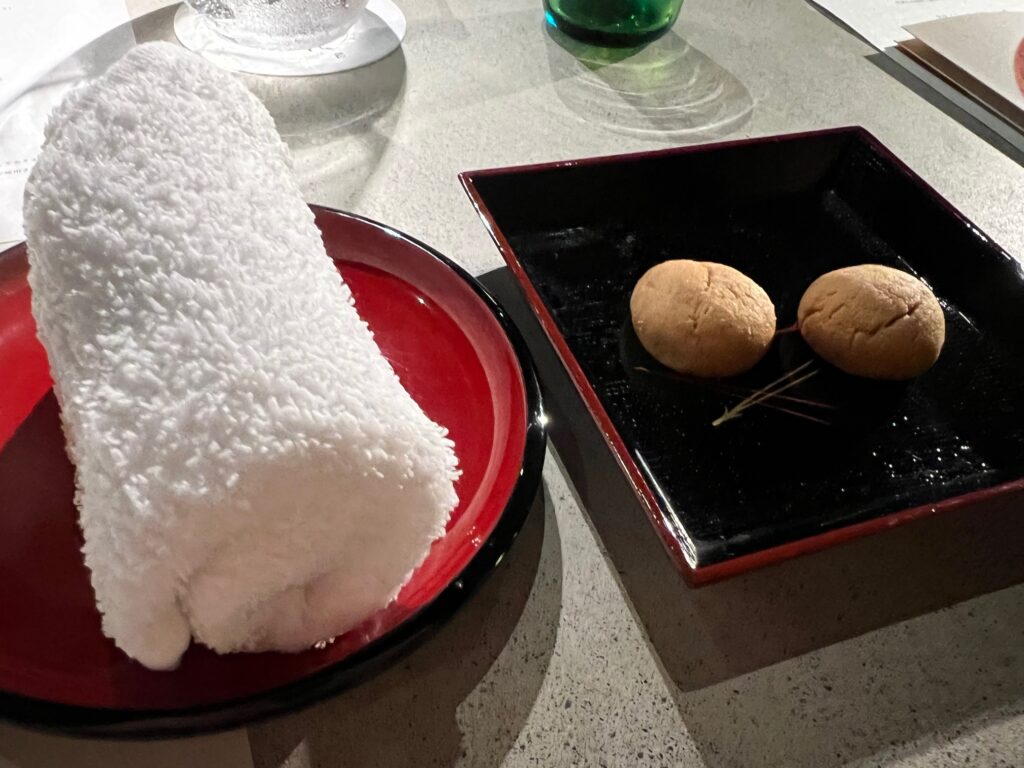
As you can see in the photographs, the red bowls are known as Ryukyu lacquerware.
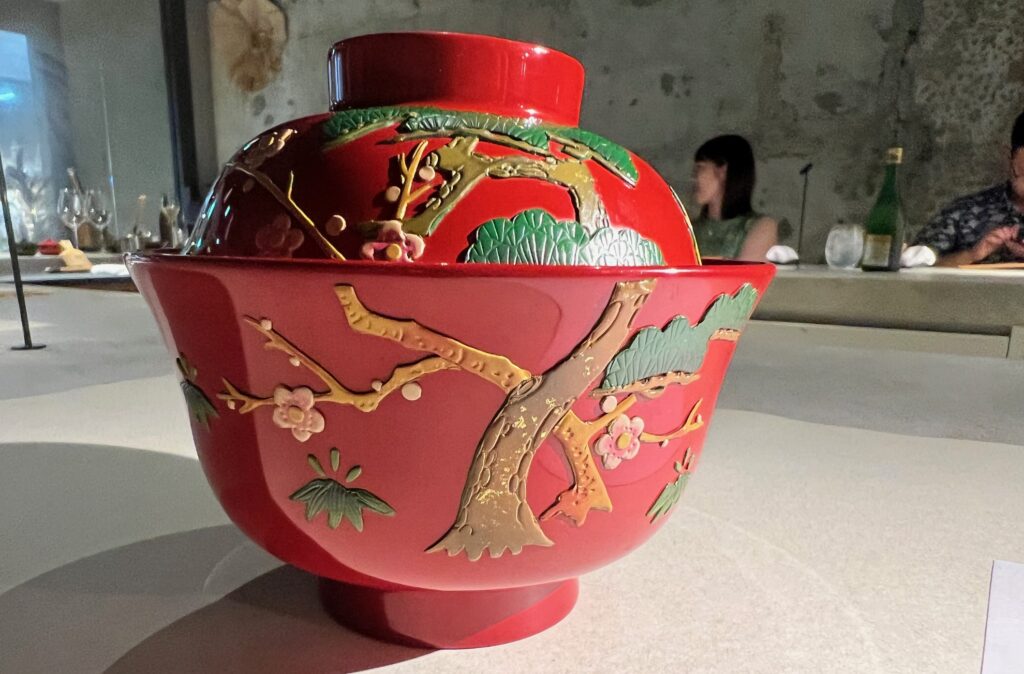
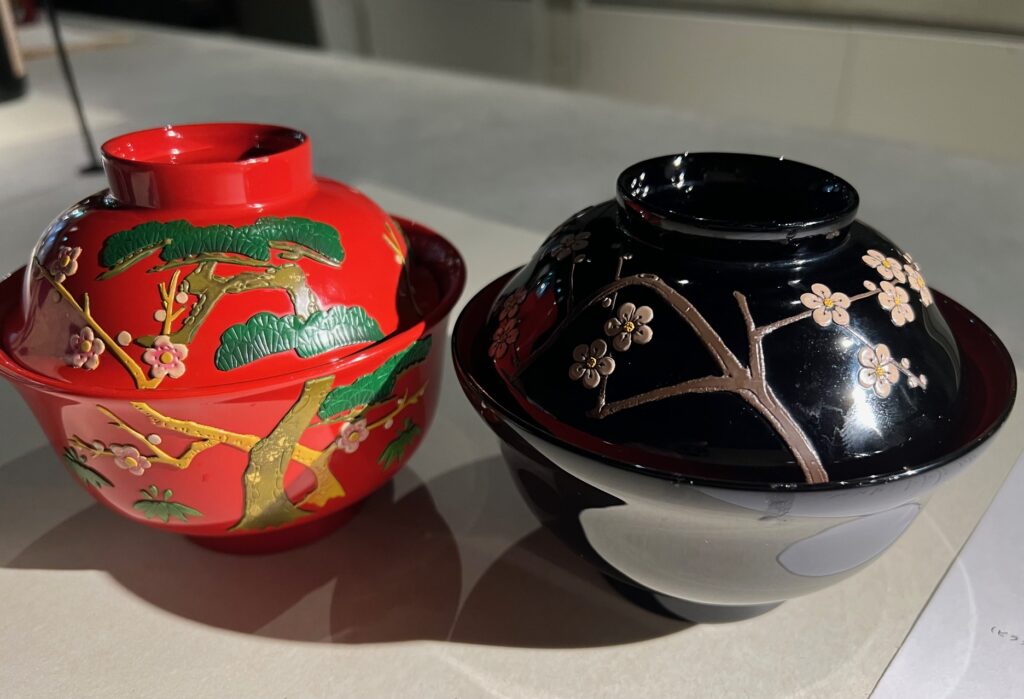
The black bowls are called Kadoman lacquerware, and I was told that they are valuable pieces that are now quite difficult to obtain.
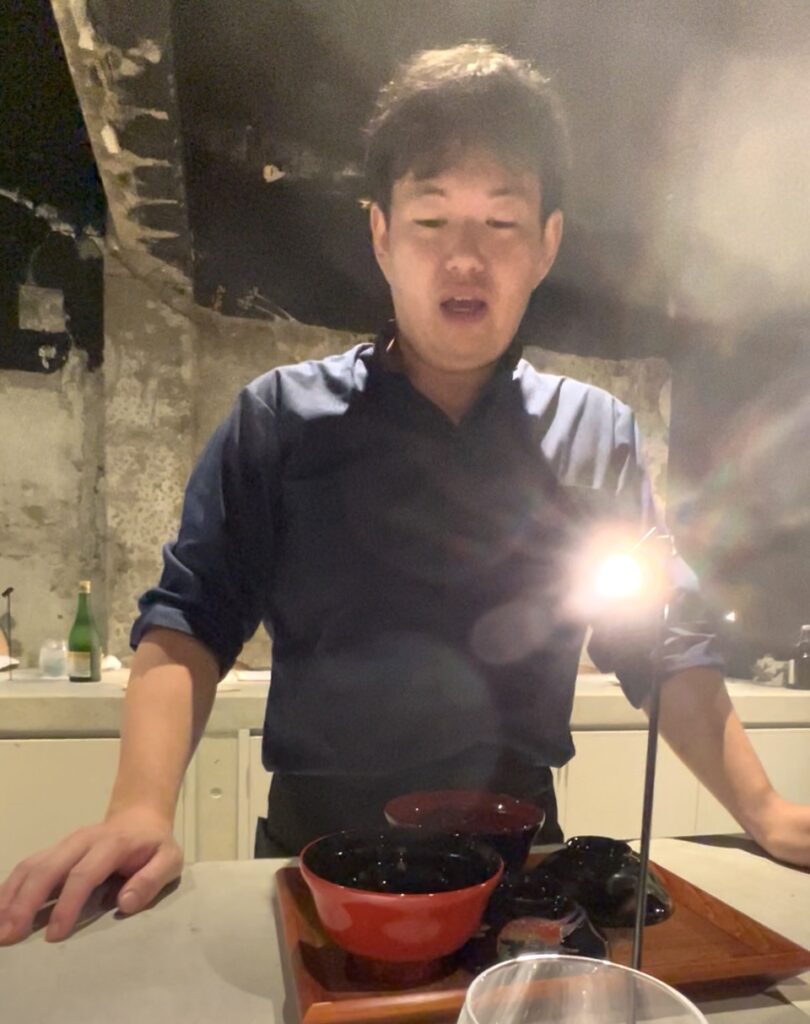
One of the chefs is an avid lover of Okinawan lacquerware. He set various lacquer pieces out before me and explained each one in great detail, which was very educational.
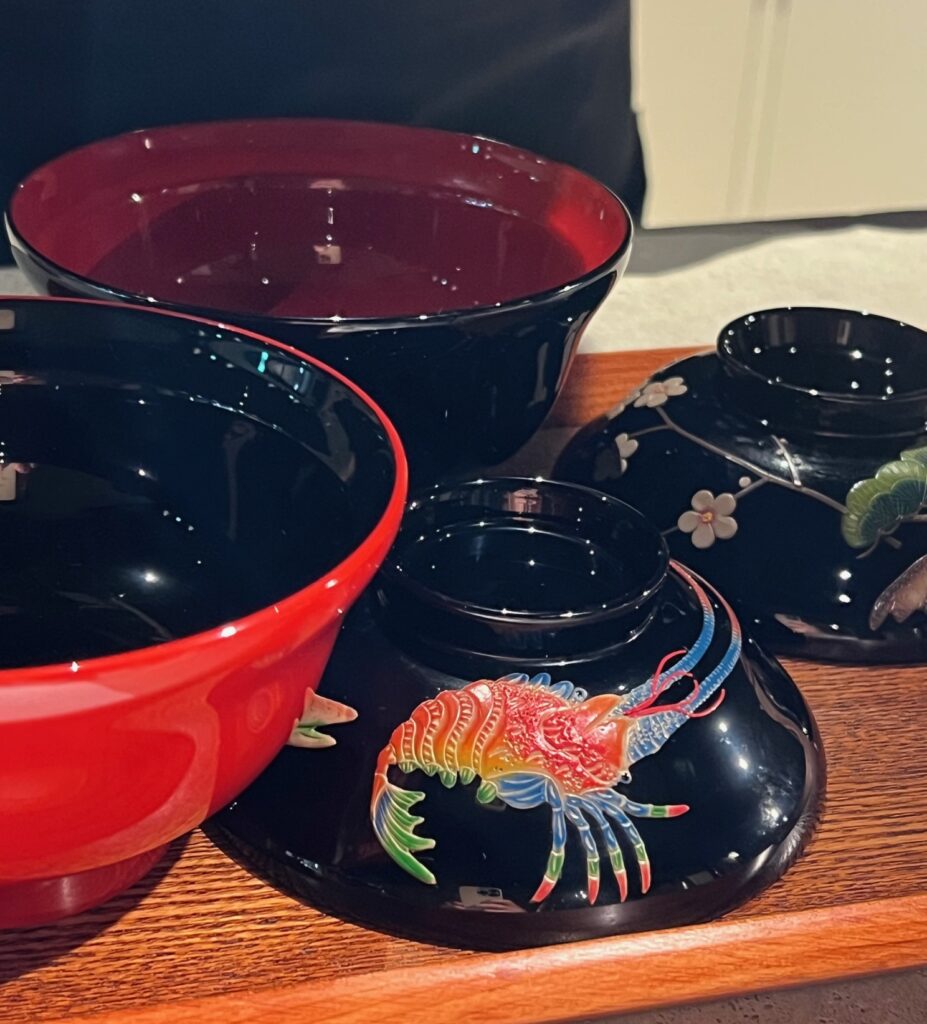
We were also served chinsuko, a traditional sweet that had been specially baked for us.
Unlike the commercially made kind one usually eats, it had a very simple, comforting flavor.
Needless to say, the chinsuko, too, was served on precious Ryukyu lacquerware.
At this chic new restaurant, I thoroughly enjoyed delicious traditional dishes created by young chefs and was able to experience Okinawa's traditional crafts as well. It was a trip that made me truly glad to have come all the way to Okinawa.
Thank you for the wonderful meal.